Thursday, 14 April 2011

Nokia W7 & W8: Espoo's first Windows Phone 7 smarties?


Prototypes of the first Windows Phone 7 (WP7) powered handsets from the House of Espoo have apparently surfaced online, as the first fruits of the Nokia & Microsoft collabo draw nearer.

Eldar Mrtazin, a man who’s turned up more than his first share of exclusives in the past, claims to have got up close and personal with the smartphones – albeit briefly.

According to Mzartin, the phones are dubbed the W7 and W8 and take their cues from the X7 and Nokia’s top of the range N8 powerhouse respectively.

Touted as the flagship Nokia WP7 number, the W7 will pack an eight megapixel snapper and – as seems to be de-riguer nowadays - a dual core processor to keep everything ticking over super smoothly.

The W8 is a lower-end bit of kit all-round. However, in keeping with Microsoft’s handset partner requirements, it’ll still boast a Qualcomm processor and is currently running a version of the WP7 UI that’s little changed from the stock version.

Release dates for the smartphones have yet to be confirmed. The fact that they appear to be at very early stages of development, though, suggests we’ve got a long, long wait on our hands before they come to market.

With that in mind it seems suggestions that Nokia could wait until next year to break cover with its WP7 efforts could be pretty on the money, after all.

Wednesday, 13 April 2011

iPad 2 hits a million already: can the competition even begin to keep up?


Analysts love to pontificate, especially when it comes to Apple. Scott Sutherland, of Wedbush Securities is the latest to pop his head over the parapet, claiming Apple sold a million iPad 2’s over the weekend, its first since launch last Friday. Specious? Maybe not. Supplies have all but dried up, with Apple stores running out and tech retailer Best Buy selling out in ten minutes.


Assuming this stat is spot on, Apple will doubtless be quick to confirm its veracity, if only to show-off to its rivals that it’s reached the million milepost in three days with the iPad 2. By comparison, the iPad took 28 days to get to the same landmark figure.

So what can the competition do? For all the chatter about Android Honeycomb tablets smashing the iPad’s dominance, only one is currently available, the Motorola Xoom. And even that is lacking Flash from the start - hardly a ringing endorsement.
Meanwhile, the HP TouchPad has now been officially pegged for June, when the iPad 2 will be out of sight. The HTC Flyer is unlikely to land until then, and while it has some excellent features, it’s going to come too late to the party. The BlackBerry PlayBook is so late arriving, you have to wonder whether it’s even worth its while coming to market at all.

It all begs the question whether the iPad’s rivals can keep up? Apple’s new slate might not have reinvented the wheel, but its breezy interface and stunning looks make it every bit as good as its new rivals.

At the start of 2011, it was assumed Apple was going to struggle to cope with the likes of the Galaxy Tab et al. And while its share is down, it’s still hovering around the 75 per cent mark. Apple has set the agenda, and the failure of Android OEMs to release their products in timely fashion is going to cost them dear.

It hurts to say it, but it looks like the iPad 2 will not have the kind of competition gadget fans and tech watchers are hoping for. This isn’t the story of the iPhone all over: that was a gadget working its way into an already evolved market. The iPad has set the tone and while everyone else watches, it’s romping into the distance.

Nokia Windows Phone 7 delay shows Espoo made the wrong choice


Since Nokia decided to relegate Symbian and MeeGo to the second tier and throw its lot in with Microsoft’s Windows Phone 7 (WP7) OS, plenty has been said about when we’d see blowers made in Espoo rocking the Big M’s operating system.

Official renderings, released just days after the tie-up was confirmed, suggested the wait wouldn’t be too long. Hints were then dropped that Nokia was desperate to get a WP7 device on shelves by the end of 2011. And why not?

Any hold-ups would mean that it wouldn’t release a flagship smartphone in 2011, when every other OEM is storming ahead with next-gen goodies. But now Espoo says its first WP7 handset won’t come until 2012, eleven months after the deal was inked.

The news comes from Nokia India’s D Shivakumar in a US regulatory filing. And what’s more, he says the full strategy won’t be implemented until 2013. It appears that Nokia is not keen on the current version of WP7 and is holding out for the so-called “Mango” update, which will bring HTML5, copy and paste and more advanced social skills to the OS.

This is as much Microsoft’s fault as it is Nokia’s, The Mango software boost had been promised for this year, but problems with a less important upgrade, which has bricked certain WP7 phones, means it will have to wait. And now Nokia wants to play the waiting game too.

How this is even an option for them is a surprise. While they get to work on a WP7 cell, rivals across the spectrum will continue to forge ahead. It’s hard to see a Nokia WP7 phone being anything other than stillborn on arrival. By that point, the iPhone 5 will have been on shelves for six months, Google will have moved past Android Ice Cream and even webOS will be resurgent.

It all shows that in its attempts not to lose face, Nokia has made the wrong decision about which OS to back. It at least could have taken HTC, Samsung and LG’s route and opted for Android as well as Windows Phone. As it is, it’s thrown itself behind a platform that is critically lauded but seemingly struggling to do the numbers. Nokia has failed to learn the lessons of the past few years: namely, holding on for something to work is a bum move. It could have worked much faster with Android and released a device that would have soared in terms of volume.

So, the wait continues. The question is, will Nokia still be relevant in the smartphone world when its WP7 is finally put up for sale? Don’t bank on it.

Sony Ericsson: Xperia Play & Arc supplies could run short


Components shortages stemming from the Japanese earthquake crisis is likely to hit supplies of the Xperia Arc and Play, Sony Ericsson (SE) has admitted.

The London-based joint venture’s two newest Android powered flagship phones are coming to market in the next few weeks. Consumer interest is expected to be especially strong for the Play, AKA the PlayStation phone, which is due to drop on March 31st.

However, while early birds are expected to encounter little problem getting their mitts on the Gingerbread-flavoured handsets, Sony Ericsson has tacitly admitted that supplies are almost certain to run short soon after.

The phone maker stated: “The affected area in northern Japan supplies a large portion of the world’s electronics industry with components, and the current situation will impact Sony Ericsson’s business.

“Although the full impact of the current situation on our business will take additional time to assess, Sony Ericsson anticipates disruption to its supply chain operations.”

SE is currently looking to source components from other suppliers to ameliorate shortages caused by damaged factories in northern Japan.

Top 10 most anticipated gadgets of 2011


Now that the year's two biggest tech expos – the Consumer Electronics Show and the Mobile World Congress – are done and dusted, we've got a good idea of what to look forward to over 2011. Time to rewrite your shopping list?

1 Sony Ericsson Xperia Play

Ninty’s latest handheld puts 3D gaming in the palm of your hand. And you don’t need special glasses to get the effect, so your cred will remain intact while taking public transport.

Titles to look out for in the something-for-everyone launch line-up include Ridge Racer 3D, Super Monkey Ball 3D, The Sims 3 and Super Street Fighter IV 3D Edition. Also planned are new additions to some of Nintendo’s biggest franchises, such as Nintendogs and The Legend of Zelda.

3 LG Optimus 3D

With so many Android phones on the market, handset makers have had to try harder to distinguish their product from the competition. LG has opted to do that by equipping its flagship smartphone challenger with 3D playback and video recording.

Right now, the biggest challenge it faces is the lack of 3D content available. But as more devs and film makers get on board with the tech, that surely won’t be a problem for long. And in the meantime, you’ve got a special 3D version of YouTube to keep you entertained.

4 iPad 2
Sure it's not the game-changer some fanboys were hoping for. But dual snappers and a super slim 8.4mm frame that's 33 per cent trimmer than its predecessor and 1.3 pounds lighter mean that it's another object of desire from the House of Cupertino. Pending the mooted delay to the European launch, should land in the UK March 25th.


5 Cheap iPhone

This canard had been around for some time now. But the way that Apple’s rival Android’s growth has been driven by cut-price phones running the OS means that a pocket-money priced iPhone could really happen this year. If only because if it doesn’t, Apple is effectively conceding a massive part of the market to Google.

According to the online rumour mill, the cut-price phone could be around two-thirds the size of the iPhone 4 and to keep costs to $200 (about £125), it’ll recycle parts used in the fourth-gen handset.


6 Motorola Xoom

Motorola’s first-ever tablet will also be the first device of its kind to showcase the slate-optimised Honeycomb version of Android. That means it’ll offer larger icons to fill its 10.1 inches of screen real estate and the option to drag and drop apps into a 3D, rotating carousel. And for the first time, tabbed browsing too.

Other standout features include a 1GHz dual core processor, dual cameras for getting your video call on and 32GB of on board memory, with scope to boost this further with a microSD card – so you’ll have plenty of room for all your apps, videos and photos.


7 BlackBerry PlayBook

Tablets aren’t just for entertainment you know. They’re serious business tools, too, which can be invaluable for presentations on the fly and video conferencing.

BlackBerry-maker Research in Motion’s slate packs dual cameras capable of recording in HD, as well as a crystal clear high-definition display and clear, rich stereo sound for the optimum video conferencing experience. And to ensure multi-tasking is seamless it packs a dual core processor to help you make the most of your life.

Users also benefit from the option to sync the PlayBook with their BlackBerry phone to easily transfer content and mails. Plus you can tether your tablet to your phone too, so there’s no need for a separate mobile internet contract.

8 Nike+ Sportwatch

This GPS enabled timepiece cum wristwatch mounted personal trainer is the result of a collaboration with between Nike and TomTom. Use it and you’ll be able to track your times, pace and distance covered.

Plus, it measures calories burned and your heart rate while you’re pounding the pedways. And we can’t help but notice that it looks much cooler than other GPS watches, as well, which is a real boon for fashion-conscious joggers.

 9 Samsung Galaxy S2

  
 The successor to one of the biggest-selling Android phones so far improves on its forbear in every way.

Measuring just 8.5mm thick, it’s the slimmest smartphone so far. But it’s still got room for a 4.3-inch Super AMOLED Plus display, an eight-megapixel camera with HD video recording and a dual core processor.

In keeping with predictions that Oyster Card-style contactless payments via mobile phones will really take off this year, Sammy has also included support for Near Field Communications (NFC).

10 Nokia Windows Phone 7 smartphone

It’s only now that the shockwaves from Nokia’s seismic announcement of a deal with Windows Phone 7-maker Microsoft have actually subsided. But for all the backbiting and cynicism about the deal in the tech press, there’s actually much to look forward to.

By replacing Symbian^3 with the user-friendly, slick Windows Phone 7 UI, Nokia is fixing the single biggest problem with its phones in one fell swoop. Meanwhile, we’ll still get the things that Nokia does well, such as free Nokia Maps and an affordable price point for its handsets.

HTC Ignite Windows Phone 7 smartie leaked and incoming in summer

HTC Ignite Windows Phone 7 smartie leaked and incoming in summer


HTC looks set to add a brand new member to its Windows Phone 7 family, the HTC Ignite, as leaked snaps of the handset have emerged online.

Posted on Chinese blog xda.cn, the Ignite is the second handset from the Taiwanese firm to be exposed this week, after snaps purportedly belonging to an upcoming Android powered smartie, the HTC Pyramid, were also revealed.

According to the site, the HTC Ignite will sport a rather underwhelming 800MHz Qualcomm processor, and, perhaps more disappointingly, a 3.7-inch touchscreen of the ‘resistive’ variety, rather than the capacitive type that smartfans are used to prodding around. RAM is slightly more respectable at 512MB RAM and a 5MP camera with LED flash means it’s not a total relic.

We can confirm right now that the Ignite is very much real, definitely runs on Windows Phone 7 and will be arriving this summer without giving away any more, so there is no question about its authenticity.

What is in question, however, are the below par specs are which fall way below the minimum standards set out by Microsoft. It could be just that the specifications are simply incorrect or that HTC has somehow managed to convince Microsoft that a cheap, low-spec kit could do wonders for its platform, which truth be told, has been struggling in a market becoming crowded with cheap Android smarties.

Despite the disappointing gen, we’re rather impressed by how slick the Ignite looks. It may not be made for existing smartphone users, but could be a match made in heaven for those looking to finally migrate from feature phones to something slightly more upmarket.

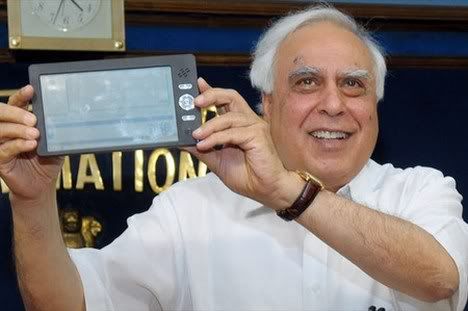
The World’s Cheapest Tablet for Only $30 each by INDIA


We often hear that cheap tablets keep coming from chinese manufacturers but the world’s cheapest Tablet comes from India. Actually the India government are trying to develop a $10 laptop but their experiment result a 7 inch tablet which only priced Rs.1500 ($30). It is not like the expected price but this $30 tablet is worth and very useful. This India’s tablet runs Linux OS and sport 2GB of RAM, WiFi and USB port as well as a webcam. The tablet support cloud computing and Adobe Flash. Lots of free or open source applications also preloaded to the tablet which include Open Office, PDF reader, Media Player and some more. This cheap Indian tablet expected to hit the Indian market starting from next year.